


You Want to Be Outside. The Question Is How.
You're planning a trip to Asheville and you want to spend time outdoors. Makes sense. The French Broad River, the Blue Ridge Parkway, Pisgah National Forest and hundreds of miles of trails are waiting. But when it comes to where you sleep, you have options. Traditional tent camping. RV campgrounds. Glamping setups. Or something that's become increasingly popular: camping cabins. This page breaks down the differences so you can decide what fits your trip, your group, and your tolerance for roughing it.
What are Camping Cabins?
Camping cabins bridge the gap between tent camping and a traditional hotel. You get a solid structure with a roof, walls, a real bed, HVAC and a private bathroom. Basically all the ease of a hotel room, but you’re still connected to the outdoors, waking up to trees instead of a parking garage.
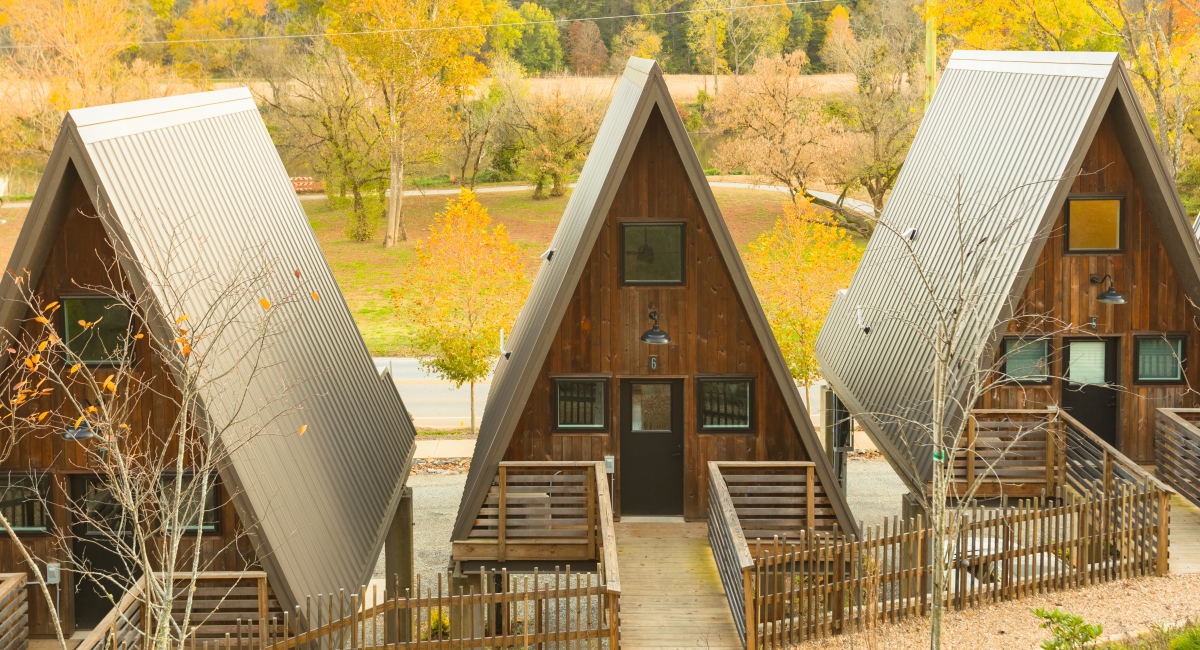
At Wrong Way River Lodge & Cabins, our property is made up of A-frame cabins elevated 12–14 feet above the ground, with queen beds, private bathrooms, climate control, WiFi, and balconies overlooking the French Broad River Greenway. They're closer to a boutique hotel room than a rustic shelter, but the setting and design keep you connected to the nostalgia of a campground. That's why we call ourselves an outdoor hotel.
Traditional Camping: The Case For and Against
Tent camping has its appeal. It's affordable, flexible, and puts you as close to nature as you can get without sleeping directly on the ground (though sometimes you're doing that too).
What's Good About Tent Camping
Cost. Campsite fees are typically $20–50 per night, significantly less than any cabin or hotel.
Flexibility. With the right gear, you can camp almost anywhere. National forests, state parks, backcountry sites.
Immersion. Nothing between you and the outdoors except a thin layer of nylon. You hear every sound, feel every temperature shift.
Self-reliance. There's satisfaction in carrying everything you need and making it work.
What's Challenging About Tent Camping
Weather dependence. Rain, cold, heat, and humidity all affect your experience dramatically. A perfect forecast can turn uncomfortable fast.
Gear requirements. Tent, sleeping bags, sleeping pads, cooking equipment, lighting, coolers. The upfront investment is significant, and packing it all takes effort.
Setup and breakdown. Pitching a tent after a long drive, then breaking it down on your last morning. It's not hard, but it's not nothing.
Sleep quality. Let's be honest: most people don't sleep as well on the ground. After a few nights, the fatigue compounds.
Bathroom situation. Campground bathhouses vary widely in quality. Backcountry camping means digging holes.
Limited recovery. After a long hike or a day on the river, tent camping offers limited comfort for recovery. No hot shower, no climate control, no real bed.
Camping Cabins: The Case For and Against
Camping cabins emerged as a middle path. You're still in an outdoor setting, but you have walls, a roof, and varying levels of amenities.
What's Good About Camping Cabins
Weather protection. Rain on the roof is pleasant when you're dry inside. Climate control means comfort regardless of conditions.
No gear required. Show up with your clothes and toiletries. The structure, bed, and basics are provided.
Better sleep. A real mattress makes a real difference, especially over multiple nights.
Recovery. Hot showers, comfortable seating, a place to spread out after a day of adventure.
Accessibility. Camping cabins work for people who can't or don't want to sleep on the ground (older travelers, families with young kids, anyone with mobility considerations) or the “outdoor curious.”
What's Challenging About Camping Cabins
Cost. More expensive than tent camping, though often comparable to mid-range hotels.
Availability. Popular camping cabins book up, especially during peak season. Less flexibility than finding a tent site.
Variability. "Camping cabins" can mean anything from a wooden box with bunk beds to a fully appointed A-frame. You need to know what you're booking.
Less "roughing it." If part of the appeal is proving you can survive with minimal comfort, a cabin undermines that narrative.
The Spectrum: From Tent to A-Frame
Not all outdoor lodging is created equal. Here's how some of the options stack up.
Tent Camping
- Shelter: Nylon tent you bring
- Bed: Sleeping pad on the ground
- Bathroom: Campground bathhouse or nature
- Climate control: None
- Cost: $20–50/night
- Best for: Budget travelers, experienced campers, those seeking maximum immersion
Basic Camping Cabins
- Shelter: Four walls and a roof, minimal insulation
- Bed: Bunk beds or platform with mattress (bring your own bedding sometimes)
- Bathroom: Shared bathhouse
- Climate control: Often none, sometimes heat only
- Cost: $50–100/night
- Best for: Families with kids, those who want shelter without full amenities
Deluxe Camping Cabins
- Shelter: Insulated structure with finished interior
- Bed: Real beds with linens provided
- Bathroom: Private or semi-private
- Climate control: Heat and sometimes AC
- Cost: $100–175/night
- Best for: Couples, small groups wanting comfort with outdoor access
A-Frame Cabins (What We Offer)
- Shelter: Architecturally distinctive structure, elevated above ground
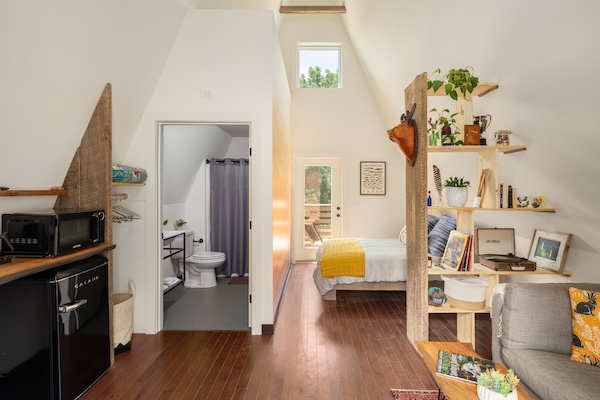
- Bed: Queen bed with hotel-quality linens, plus sleeper sofa
- Bathroom: Private bathroom with hot shower
- Climate control: Full heat and AC
- Amenities: Mini-fridge, microwave, coffee service, WiFi, private balcony
- Cost: $150–350/night (varies by season)
- Best for: Anyone who wants outdoor immersion without sacrificing comfort
Why We Built Something Different
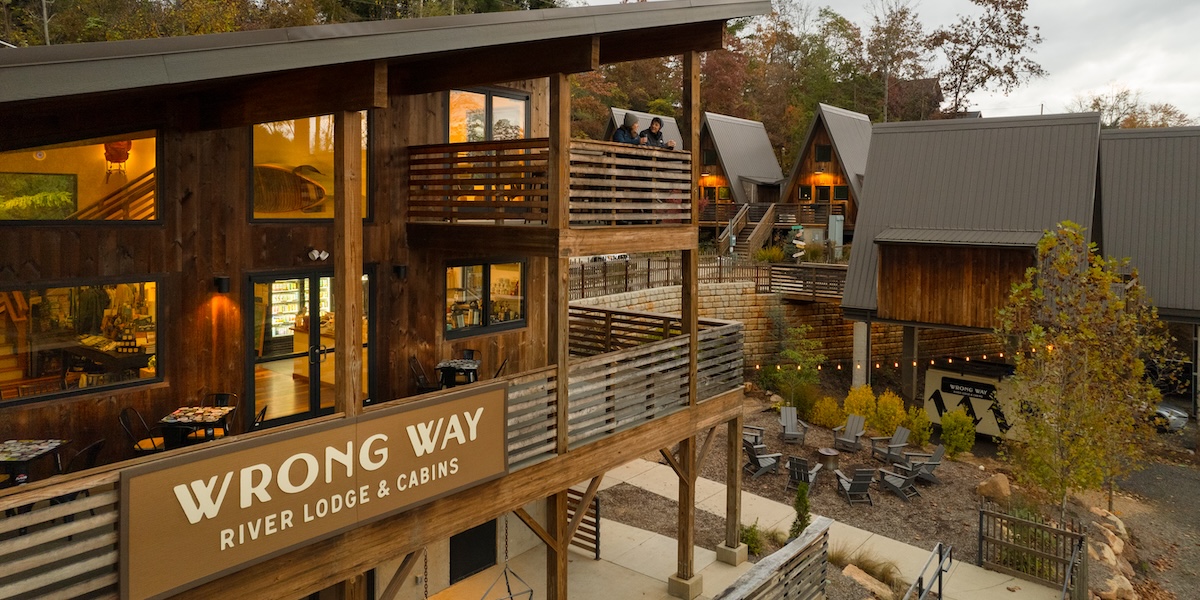
Wrong Way River Lodge & Cabins started with a question: why aren’t there any camping cabins that align with Asheville’s outdoor personality?
The answer is our stilted A-frame cabins. Sixteen A-frame structures perched on the hillside above the French Broad River Greenway. Balconies with ENO hammocks offer you a chance to relax on your private porch. NO TVs. Just old fashioned analogue fun: record players, books and board games. And yes, you also have a hot shower, a comfortable queen size bed, coffee bar, and climate control when you need it.
We call it a camping cabin. It's camping reimagined for people who want adventure without sacrificing those key creature comforts, like sleep quality and a hot shower. The location matters too. Direct access to the greenway and the French Broad River offers guests options like walking, running, paddling, and tubing. And both downtown Asheville and Biltmore Estate are two miles away (in opposite directions). You're not isolated in the backcountry; you're positioned at the center of everything Asheville has to offer.
Choosing What's Right for Your Trip
A few questions to help you decide:
How important is sleep quality? If you sleep fine anywhere, tent camping works. If you need a real bed to function, skip the tent.
How much gear do you want to manage? Tent camping requires equipment. Cabins require a reservation and a bag.
Who's coming with you? Kids, older relatives, and dogs all have different needs. Cabins accommodate a wider range of travelers. Let’s be honest, you’ve got to consider the entire family when you’re booking a trip.
What's the weather forecast? Tent camping in perfect weather is magical. Tent camping in rain or extreme temperatures is a different experience entirely.
What do you want to do during the day? If your days are packed with hiking, paddling, and exploring, you may want a comfortable place to recover. If camping itself is the activity, a tent makes sense.
What's your budget? Tent camping is cheapest. Cabins cost more but eliminate gear costs and offer better recovery.
Options for Camping Near Downtown Asheville
If you're searching for camping near downtown Asheville, here's the reality: true campgrounds close to downtown are limited. Most tent camping options are 20–45 minutes outside the city, in national forest land or private campgrounds in the surrounding mountains.
Camping cabins offer a middle path. Wrong Way River Lodge & Cabins is 5 minutes from downtown Asheville with direct greenway access and river proximity. You get the outdoor setting without the remote location.
For those set on tent camping, options include:
- Lake Powhatan (Bent Creek, ~25 minutes from downtown)
- North Mills River (Pisgah National Forest, ~35 minutes)
- Davidson River Campground (Pisgah, ~45 minutes)
Each offers quality camping in beautiful settings, but you'll be driving if you want to access Asheville's restaurants, breweries, and attractions.
Book a Camping Cabin at Wrong Way
If a Camping Cabin sounds like the right fit, we'd love to host you. Our A-frame cabins combine the outdoor connection you're looking for with the comfort that makes a trip actually restorative. Sixteen cabins. French Broad River Greenway access. Five minutes from downtown Asheville. On-site staff to help you plan your adventures. Check availability and book directly.
Check Availability | Contact Us